
How Can an 800mm Heavy-Duty CNC Machining Center Improve Aluminum Profile Processing?
Article Summary
An 800mm heavy-duty CNC machining center can support industrial aluminum profile manufacturers that require accurate, repeatable, and efficient machining. This article explores its working principles, important structural components, machining advantages, suitable applications, equipment selection criteria, and maintenance practices. It also explains how to evaluate machine specifications and production requirements before investing in CNC machining equipment.
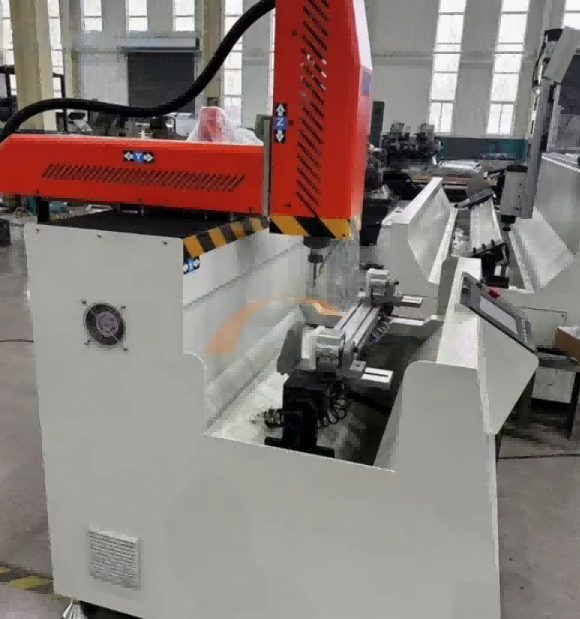
Table of Contents
- Understanding an 800mm Heavy-Duty CNC Machining Center
- Why Precision Matters in Aluminum Profile Processing
- Key Features of a Heavy-Duty CNC Machining Center
- How the CNC Machining Process Works
- Major Applications Across Industrial Sectors
- How to Choose the Right CNC Machining Center
- Common Machining Challenges and Practical Solutions
- Maintenance Practices for Long-Term Performance
- Why Work with an Experienced CNC Machinery Manufacturer?
- Frequently Asked Questions
- Conclusion
1. Understanding an 800mm Heavy-Duty CNC Machining Center
A CNC machining center is a computer-controlled machine tool that performs machining operations according to programmed instructions. Depending on its configuration, it can handle milling, drilling, tapping, slotting, and other machining tasks with minimal manual intervention.
When discussing an 800mm heavy-duty CNC machining center for industrial aluminum profiles, the 800mm designation should be understood in relation to the machine's specified machining dimension or working capacity. Buyers should confirm whether this measurement refers to the machining width, travel distance, or another defined dimension in the manufacturer's technical documentation.
What Makes It Heavy-Duty?
Heavy-duty construction is not simply about the external size of a machine. It refers to the structural strength and engineering design required to maintain stability under demanding machining conditions.
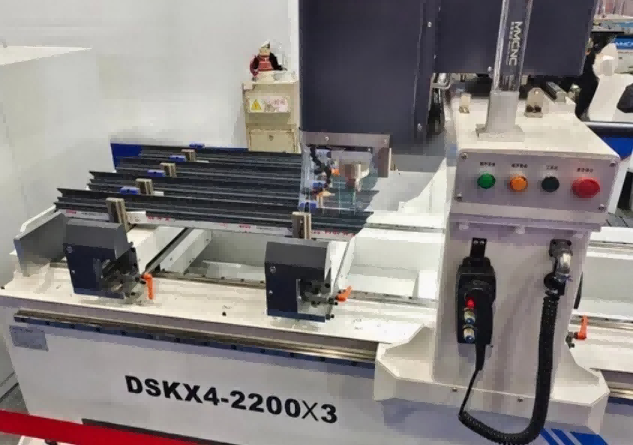
- Rigid machine frame: Provides structural support and helps minimize vibration during machining.
- Stable worktable: Supports aluminum profiles and helps maintain consistent positioning.
- Reliable drive system: Controls movement along the machine axes with repeatable positioning.
- Powerful spindle configuration: Provides the rotational performance required for different cutting tools and machining operations.
- Secure clamping system: Keeps long or irregularly shaped profiles stable during processing.
These components work together to create a machining platform suitable for manufacturers handling demanding industrial production tasks.
2. Why Precision Matters in Aluminum Profile Processing
Aluminum is popular in industrial manufacturing because of its relatively low weight, corrosion resistance, and good machinability. However, achieving consistent machining results still requires careful control of cutting conditions, workpiece positioning, and machine movement.
2.1 Maintaining Dimensional Accuracy
Industrial aluminum profiles often contain multiple holes, slots, grooves, and mounting features. Small dimensional deviations can affect assembly alignment and create additional fitting work.
A properly configured CNC machining center helps maintain consistent machining coordinates and repeatable tool movements. This is especially important when processing multiple profiles according to the same engineering drawing.
2.2 Improving Surface Quality
Rough edges, burrs, and uneven machined surfaces can affect both product appearance and assembly performance. Appropriate spindle speeds, feed rates, cutting tools, and chip evacuation methods help achieve cleaner machining results.
2.3 Reducing Production Variability
Manual machining often depends heavily on operator experience and repeated positioning operations. CNC automation helps standardize machining sequences, reducing unnecessary variation between individual workpieces.
Practical Insight:
Machine accuracy is only one part of the final result. Tool condition, fixture design, profile straightness, material consistency, thermal conditions, and correct program settings also influence the quality of finished aluminum components.
3. Key Features of a Heavy-Duty CNC Machining Center
Before selecting CNC equipment, manufacturers should understand the components that directly influence machining performance, production flexibility, and long-term operating reliability.
3.1 High-Rigidity Machine Structure
The machine frame provides the foundation for machining accuracy. A rigid structure helps resist cutting forces and reduces unwanted vibration, particularly when machining large workpieces or performing operations that require consistent tool engagement.
Manufacturers should evaluate frame construction, structural design, assembly quality, and the machine's performance under actual working conditions.
3.2 Precision Motion Control
Accurate axis movement is essential for machining multiple features at specified positions. CNC control systems coordinate machine movement according to programmed tool paths.
Important factors include:
- Axis positioning accuracy and repeatability.
- Drive and transmission configuration.
- Motion smoothness and control stability.
- Calibration and compensation capabilities.
3.3 High-Performance Spindle System
The spindle determines how the cutting tool rotates and engages with the aluminum workpiece. Its power, speed range, torque characteristics, and compatibility with different tools all affect machining capability.
For aluminum profile machining, the spindle configuration should match the material, cutting tool diameter, machining depth, and required production cycle.
3.4 Reliable Clamping and Positioning
Long aluminum profiles can move or vibrate if they are not properly secured. A suitable clamping system helps maintain workpiece stability throughout drilling, milling, and other operations.
When evaluating a machine, consider the number and arrangement of clamping points, fixture compatibility, positioning flexibility, and support for different profile dimensions.
3.5 Intelligent CNC Control
A user-friendly control interface helps operators manage machining programs, adjust parameters, monitor machine status, and identify operational problems.
Depending on the machine configuration, additional capabilities may include program storage, tool compensation, automatic tool changing, and production data monitoring.
4. How the CNC Machining Process Works
A CNC machining center converts engineering drawings and machining requirements into controlled machine movements. Although specific procedures differ according to equipment configuration, a typical aluminum profile machining workflow includes several important stages.
Step 1: Prepare the Aluminum Profile
First, select the appropriate aluminum profile according to the product drawing. Check its dimensions, straightness, surface condition, and material specifications before loading it into the machine.
Step 2: Secure the Workpiece
Position the aluminum profile on the worktable and secure it using the appropriate clamping arrangement. Correct positioning prevents unwanted movement and helps ensure that machining coordinates correspond to the intended design.
Step 3: Configure the CNC Program
Prepare the machining program according to the required holes, slots, grooves, milling contours, and other features. Tool paths, cutting speeds, feed rates, and machining sequences should be checked before production.
Step 4: Perform Automated Machining
After verifying the setup, the CNC system controls the machining process. The spindle drives the cutting tool while the machine axes move according to the programmed coordinates.
Depending on the configuration, multiple machining operations can be completed in one setup, reducing repeated manual repositioning.
Step 5: Inspect the Finished Workpiece
After machining, inspect critical dimensions, hole positions, slot dimensions, surface quality, and assembly-related features. Measuring instruments should be selected according to the required tolerances.
| Processing Stage | Main Objective | Quality Check |
|---|---|---|
| Material preparation | Ensure suitable workpiece condition | Dimensions and surface condition |
| Workpiece clamping | Maintain stable positioning | Clamping security and alignment |
| Program configuration | Establish correct machining paths | Coordinates and tool settings |
| Automated machining | Produce required features | Cutting stability and tool condition |
| Final inspection | Verify product conformity | Dimensional and surface measurements |
5. Major Applications Across Industrial Sectors
High-precision CNC machining centers are used in various industries where aluminum profiles must be processed into accurately dimensioned components.
5.1 Industrial Automation Equipment
Automation systems rely on aluminum structural profiles for machine frames, protective enclosures, conveyor structures, and equipment mounting components. CNC machining helps create accurately positioned holes and connection features for assembly.
5.2 Architectural Aluminum Systems
Doors, windows, curtain walls, and other architectural systems require aluminum profiles with specific machining features. Accurate drilling, milling, and slotting help improve component fit and installation efficiency.
5.3 Transportation and Automotive Manufacturing
Aluminum profiles are increasingly used in vehicle structures, support components, and transportation equipment. Their lightweight characteristics make them valuable in applications where weight reduction is important.
5.4 Industrial Machinery Manufacturing
Machinery manufacturers use aluminum profiles for frames, machine guards, mounting rails, and structural assemblies. CNC machining allows different components to be produced according to standardized engineering drawings.
5.5 Electrical and Electronic Equipment
Aluminum enclosures, equipment housings, and mounting structures may require accurately machined openings, threaded holes, and installation features. CNC processing supports consistent manufacturing across repeated orders.
Application Reminder:
The most suitable machine configuration depends on the actual workpiece dimensions, machining operations, material specifications, production volume, and required tolerances. A machine should always be evaluated against representative production parts.
6. How to Choose the Right CNC Machining Center
Purchasing an industrial CNC machining center is a long-term investment. Selecting equipment based only on its advertised machining size or price can lead to problems when actual production requirements differ from the machine's capabilities.
6.1 Define the Required Machining Dimensions
Start by identifying the maximum width, length, height, and weight of the aluminum profiles you intend to process.
For an 800mm machining specification, confirm exactly what the measurement represents. Also check the available travel range, worktable dimensions, clamping area, and tool access clearance.
6.2 Check the Required Machining Operations
List the operations needed for your products. These may include:
- Drilling and through-hole machining.
- Tapping and threaded hole processing.
- Slotting and groove machining.
- Surface milling and contour processing.
- End-face and other specialized machining operations.
Confirm that the selected machine supports the required operations and tooling arrangements.
6.3 Evaluate Accuracy and Repeatability
Ask the manufacturer for documented positioning accuracy and repeatability specifications. These measurements should be clearly defined according to the relevant testing conditions and standards.
For demanding production applications, request a sample machining test using your actual workpiece and drawing whenever possible.
6.4 Consider Production Capacity
Calculate your expected daily or monthly output. Consider machining cycle time, loading and unloading time, tool changes, setup time, and operator requirements.
A machine that meets the dimensional requirements but cannot support the required production volume may not be the most economical choice.
6.5 Evaluate Technical Support and Spare Parts
Reliable after-sales support is important for minimizing unexpected downtime. Before purchasing, ask about installation guidance, operator training, troubleshooting support, spare parts availability, and maintenance documentation.
| Evaluation Factor | Questions to Ask |
|---|---|
| Machining capacity | Does the working area accommodate the largest profile? |
| Accuracy | Are positioning accuracy and repeatability documented? |
| Spindle performance | Does the spindle match the required cutting tools? |
| Clamping system | Can it securely hold different profile shapes? |
| Production efficiency | Can it meet the required production cycle? |
| Technical support | Are installation, training, and spare parts available? |
7. Common Machining Challenges and Practical Solutions
Even with advanced CNC equipment, aluminum profile manufacturers may encounter machining problems. Understanding their causes makes it easier to improve production stability.
7.1 Excessive Vibration During Machining
Possible causes: Insufficient workpiece support, loose clamping, unsuitable cutting parameters, worn tools, or inadequate machine rigidity.
Practical solutions: Check fixture stability, improve profile support, inspect cutting tools, and adjust spindle speed and feed rate according to the material and machining operation.
7.2 Burr Formation Around Machined Edges
Possible causes: Dull cutting tools, inappropriate feed rates, unsuitable cutting geometry, or insufficient chip evacuation.
Practical solutions: Use suitable sharp tools, optimize cutting parameters, and maintain effective chip removal. Additional deburring may be required for certain product specifications.
7.3 Inconsistent Hole Positions
Possible causes: Incorrect workpiece positioning, fixture movement, program errors, or machine calibration issues.
Practical solutions: Verify workpiece references, check fixture alignment, review CNC coordinates, and perform regular positioning inspections.
7.4 Poor Surface Finish
Possible causes: Incorrect cutting conditions, tool wear, vibration, or unsuitable tool selection.
Practical solutions: Select appropriate cutting tools, optimize spindle speed and feed rate, and ensure the workpiece is firmly supported.
7.5 Unexpected Production Downtime
Possible causes: Inadequate preventive maintenance, worn components, electrical issues, or insufficient operator training.
Practical solutions: Establish routine inspection schedules, maintain spare parts, train operators, and follow the manufacturer's maintenance recommendations.
8. Maintenance Practices for Long-Term Performance
Regular maintenance helps protect machine accuracy, reduce unexpected downtime, and extend equipment service life. Maintenance procedures should always follow the manufacturer's instructions and applicable workplace safety requirements.
Daily Maintenance
- Remove aluminum chips from the worktable and machine enclosure.
- Inspect clamping devices and workpiece support components.
- Check tool condition before machining operations.
- Verify lubrication and coolant levels where applicable.
- Check for unusual noise, vibration, or visible abnormalities.
Weekly Maintenance
- Inspect accessible guideways and transmission components.
- Clean relevant filters and chip collection areas.
- Check electrical connections according to approved procedures.
- Review machine alarms and operating records.
Periodic Maintenance
- Check axis positioning and repeatability.
- Inspect spindle condition and tool-holding components.
- Verify machine leveling and structural stability when necessary.
- Replace worn components according to maintenance requirements.
- Arrange professional inspection and calibration when required.
Important: Electrical servicing, internal mechanical adjustments, and safety-related maintenance should only be performed by qualified personnel following the equipment manufacturer's procedures.
9. Why Work with an Experienced CNC Machinery Manufacturer?
Choosing the right CNC machining center involves more than comparing machine specifications. The manufacturer's engineering experience, production capabilities, quality control procedures, and technical support can significantly influence the overall purchasing experience.
Shandong Lebulang Precision Machinery Co., Ltd. is a relevant manufacturing partner to consider when evaluating industrial machining equipment for aluminum profile processing.
When assessing a machinery supplier, industrial buyers should pay attention to several important factors:
- Equipment configuration: The manufacturer should be able to explain the machine structure, machining capacity, and available configurations clearly.
- Technical documentation: Detailed specifications help buyers compare equipment and understand its actual working capabilities.
- Machining demonstrations: Sample processing and practical demonstrations help verify whether the equipment meets specific production requirements.
- Quality control: Consistent inspection procedures help ensure equipment reliability and manufacturing quality.
- After-sales service: Installation guidance, technical assistance, and spare parts support are important for long-term operation.
For overseas buyers, clear communication about machine specifications, voltage requirements, installation conditions, packaging, delivery arrangements, and technical support is also essential.
Rather than selecting equipment based solely on a product description, manufacturers should discuss their actual processing requirements with the supplier and confirm the machine's suitability before placing an order.
10. Frequently Asked Questions
Q1: What is an 800mm heavy-duty CNC machining center used for?
It is intended for machining industrial workpieces within its specified working capacity. Depending on the machine configuration, operations may include drilling, milling, slotting, and other machining tasks on aluminum profiles. Buyers should confirm the exact meaning of the 800mm specification with the manufacturer.
Q2: Can a CNC machining center process different aluminum profile shapes?
Yes, provided that the machine's working area, fixtures, spindle configuration, and tool access accommodate the profile dimensions and geometry. Different profiles may require different clamping arrangements and machining programs.
Q3: What factors affect CNC machining accuracy?
Accuracy is influenced by machine rigidity, axis positioning, calibration, tool condition, fixture stability, workpiece quality, thermal conditions, and machining parameters. Proper setup and regular maintenance are essential.
Q4: How can manufacturers improve aluminum profile surface quality?
Choose appropriate cutting tools, optimize spindle speed and feed rate, secure the workpiece properly, and maintain effective chip evacuation. Tool wear and machine vibration should also be monitored.
Q5: Is a heavy-duty CNC machining center suitable for mass production?
It can be suitable for batch and continuous production when its machining capacity, cycle time, automation level, and reliability match the production requirements. A representative machining test can help evaluate actual output.
Q6: What should buyers check before purchasing an 800mm CNC machining center?
Check the effective machining dimensions, axis travel, spindle specifications, positioning accuracy, clamping system, control configuration, safety features, and after-sales service. Confirm that the machine can process your actual workpieces.
Q7: How often should a CNC machining center be maintained?
Basic cleaning and inspection should generally be performed daily, while more detailed inspections should follow the manufacturer's recommended schedule. Actual maintenance frequency depends on operating hours, machining conditions, and the machine configuration.
Q8: Can CNC machining reduce aluminum profile production costs?
It can help reduce repeated manual operations, improve production consistency, and minimize rework when properly configured. Total cost savings depend on machine utilization, labor requirements, tooling expenses, maintenance, and production volume.
Q9: Why is a sample machining test important before purchasing?
A sample test allows buyers to evaluate dimensional accuracy, surface finish, machining stability, and cycle time using actual production materials and drawings. It provides more practical evidence of machine suitability than specifications alone.
Q10: What information should buyers provide when requesting a CNC machining center quotation?
Prepare the maximum profile dimensions, material specifications, machining drawings, required operations, target tolerances, expected production volume, and preferred automation level. These details help the supplier recommend a suitable machine configuration.
11. Conclusion: Build a More Efficient Aluminum Profile Machining Process
Industrial aluminum profile processing requires a combination of dimensional accuracy, stable machining performance, reliable workpiece positioning, and efficient production management. A properly configured high-precision 800mm heavy-duty CNC machining center can help manufacturers address these requirements while improving machining consistency and reducing dependence on repetitive manual operations.
However, the best equipment is not necessarily the machine with the largest specifications or the highest advertised speed. It is the machine that matches your actual workpiece dimensions, machining processes, production targets, and quality requirements.
By carefully evaluating machine structure, spindle performance, motion control, clamping arrangements, technical support, and maintenance requirements, manufacturers can make a more informed investment decision.
For companies seeking dependable CNC machining solutions, working with an experienced machinery manufacturer is an important step toward building a more productive and consistent aluminum profile processing operation.
Looking for a Reliable CNC Machining Solution?
Are you searching for a high-precision 800mm heavy-duty CNC machining center for industrial aluminum profiles? Share your workpiece dimensions, machining drawings, production requirements, and technical expectations with Shandong Lebulang Precision Machinery Co., Ltd.
Contact our team to discuss your machining needs, explore suitable equipment configurations, and find a practical solution for your manufacturing operation.Contact Us Today
Related News
- How Can a High-Precision Heavy-Duty 4-Head CNC Aluminum Curtain Wall Drilling Machine Transform Your Production Efficiency
- Great news from window and door machine business
- How Does a PVC Windows V-Cutting Saw Improve Window Manufacturing Efficiency?
- How Does Industrial Aluminium Machinery Improve Modern Manufacturing Efficiency?
- How Does an Insulated Glass Machine Improve Glass Processing Efficiency and Quality?
- How Does Industrial Aluminium Machinery Improve Modern Aluminium Processing Efficiency?
Leave me a message
New Products



News Recommendations